Table turnover tells you how many times a table seats guests in a given period. In busy hours the scarcest resource is minutes at the table, but speeding up turnover does not mean rushing guests. The real aim is to cut the waiting they never wanted: getting the menu, giving the order, receiving the food, getting the bill. This article starts with what to measure and then walks through practical improvements for every stage.
Measure first: where do the minutes go?
Before you change anything, record the following times for a week. Your only benchmark should be your own history, not other venues; judge lunch and dinner, weekdays and weekends separately.
| Time | How to find it | What it tells you |
|---|---|---|
| Time at the table | Difference between the check's opening and closing time | Overall turnover |
| Time to first order | Seating to the first item sent to the kitchen | Greeting and order-taking bottleneck |
| Kitchen time | Sent to "ready" | Kitchen capacity, station split |
| Bill time | Asking for the bill to payment completed | Till and payment bottleneck |
| Table reset time | Closing of the old check to opening of the next | Cleaning and seating speed |
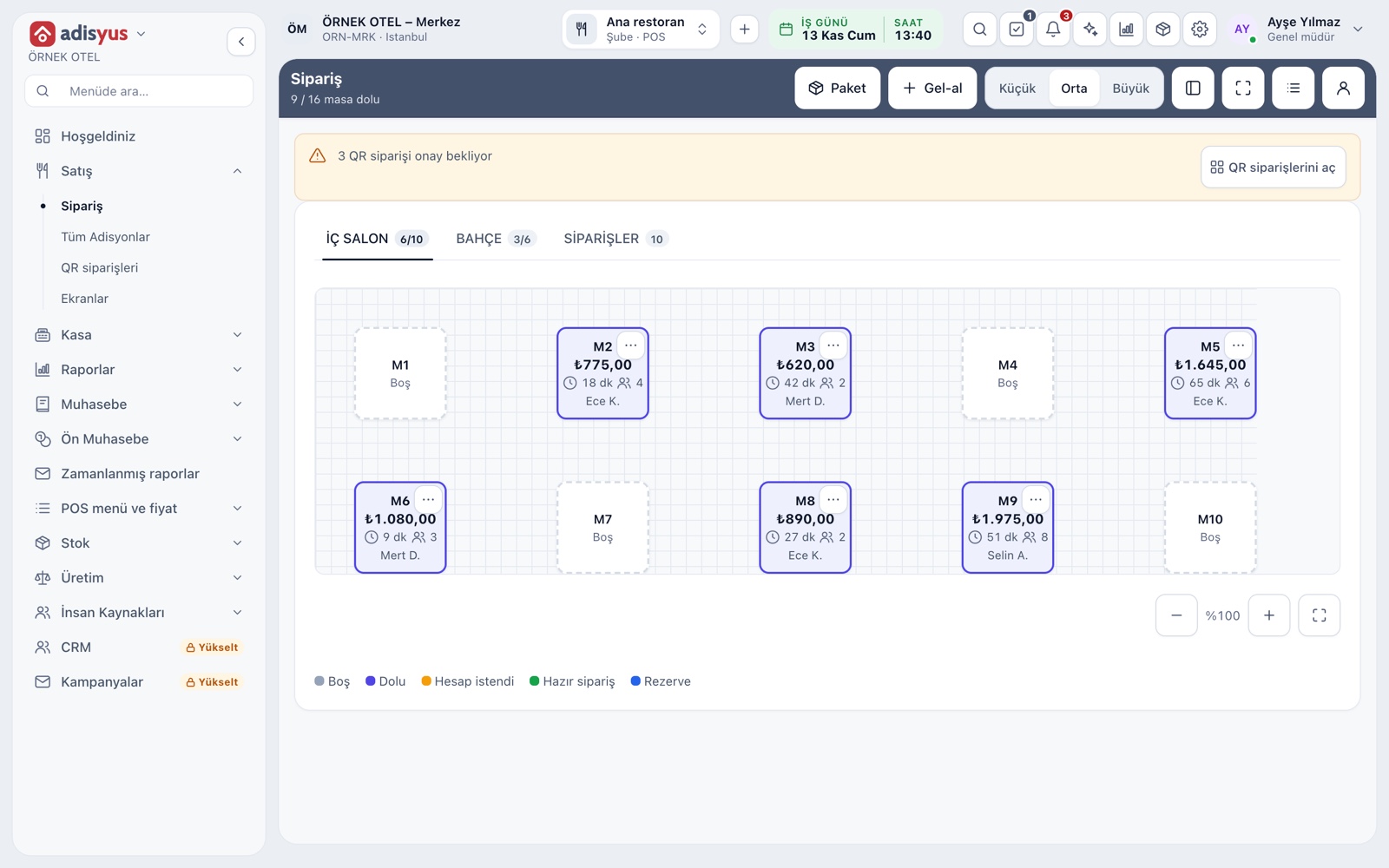
In adisyus, the opening and closing times of checks appear in the All Checks list, and the time a table has been occupied is on the table card of the service screen. The waiter report adds checks, guests and average check per waiter. These three sources are enough to start measuring.
Shorten the service cycle in five stages
1. Greeting and seating. Plan reservation slots on the time guests actually stay, not on an estimate. Tell waiting guests honestly how long the wait is, and make sure your team is the first to notice when a table frees up.
2. Order taking. Take the drinks order as soon as the menu reaches the table, and send the first items to the kitchen without waiting for every decision. A waiter tablet lets staff enter orders at the table and removes the walk back to the till. For tables ordering from the QR menu, the order drops onto the check after staff approval.
3. Kitchen and service. Sending each item to the right preparation station (soup to the hot kitchen, drinks to the bar) shortens the wait. On multi-course tables, course firing makes the main course come right after the starter, neither too early nor too late. Delay colours on the kitchen display show a problem before the plate goes cold, and the ready bell tells the waiter.
4. The bill. This is the stage that loses the most time and gets discussed the least. After the meal, whether the table frees up often depends on the bill. We cover it in the next section.
5. Resetting the table. The moment the check closes, the table turns free on the floor plan, so the cleaning crew sees it without anyone shouting across the room. Let the screen set the cleaning order, too.
Four ways to shorten the bill stage
- Prepare the pre-bill early. When the meal is nearly over, print the interim bill and have it ready at the table, so the guest does not wait when they ask.
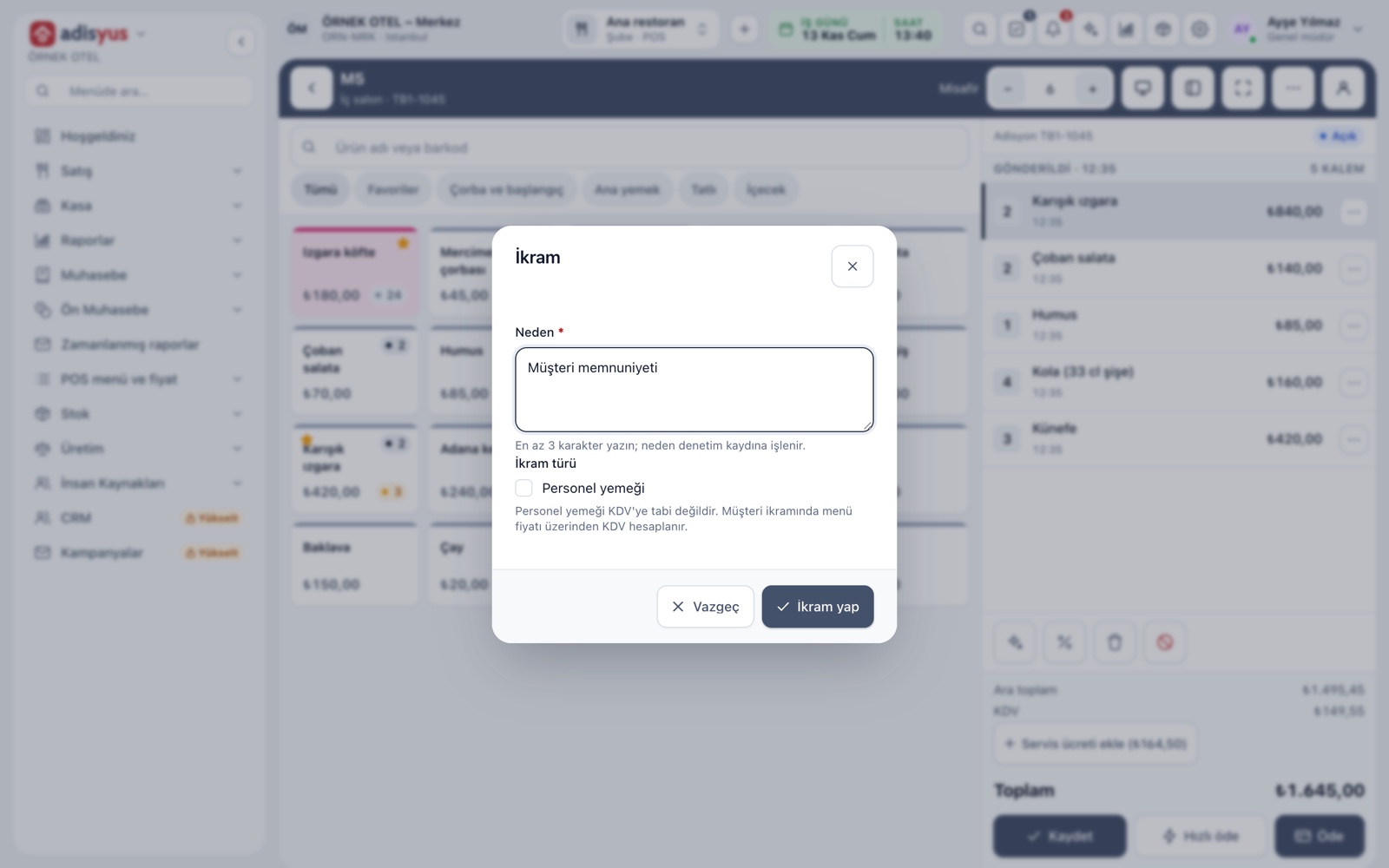
- Make splitting easy. A bill can be split by items, by guest group or by a free amount, and for quantity lines such as "3 colas" you can pay a chosen number separately. Splitting by hand costs both time and accuracy.
- Use quick pay. The whole remaining balance is collected with one tap; for cash, the change appears once you type the amount tendered.
- Offer an alternative for cards. Showing a QR code that lets the guest pay from their phone can shorten the till queue. The link is single-use and valid for a limited time. Keep a card terminal at hand as a fallback.
Read the floor plan like a control panel
The table card shows how long the check has been open, the number of guests, the waiter and the amount; table status is separated by colour and badge. Three habits make a difference:
- Turn on the idle table alert. A table with an open check that sees no order, note or payment for the time you set gets flagged. Most often that table was forgotten: it is waiting for dessert or the bill.
- Do not let a ready order wait. When the kitchen marks it ready, the table status changes and the waiter carries the plate while it is hot.
- Use move and merge. When guests change tables the check moves with them; for large parties two checks can be merged, so a second table is not left idle.
Balance speed against revenue
Faster turnover alone is not a gain. If guests skip coffee or dessert because the bill is placed in front of them, the table frees up sooner but the average check falls. The table below sums up the expected effect of each measure and what to watch.
| Measure | Expected effect | Watch out for |
|---|---|---|
| Waiter tablet | Shorter time to first order | Wrong entries rise without training |
| Course firing | Even spacing between courses | A late fire keeps the kitchen waiting |
| Pre-bill printing | Shorter bill stage | Guests must not feel rushed |
| Idle table alert | Forgotten tables are caught | Too short a limit turns the alert into noise |
| QR payment | Less waiting at the till | A fallback is a must for guests without a phone or connection |
Watch the average check in the waiter report together with time at the table: if the time drops while the average drops too, you are paying for speed with lost sales.
A four-week plan
- Week one: Measure only. Write down average time at the table, time to first order and bill time for lunch and dinner.
- Week two: Pick the longest stage and apply a single measure to it.
- Week three: Compare with the previous week on the same day and shift, and show the numbers to the team.
- Week four: Keep what worked, drop what did not and move on to the next stage.
A quick checklist:
- Am I measuring time at the table?
- How many minutes after ordering does the first item reach the kitchen?
- Is the pre-bill ready before the meal ends?
- Is the idle table alert on, and is its limit sensible?
- Is the average check holding up as speed improves?
Conclusion
Turnover rises not through a single button but through small gains at every stage of the service cycle. Measuring first, focusing on the longest stage and judging the result together with the average check will take you in the right direction. For details on the floor plan, table statuses and the idle table alert, see Table Plan and Zones.