
How much of the goods entering the kitchen end up on the plate and how much in the bin? The gap between the consumption your recipes predict and the real consumption you find by counting is the sum of trim loss, waste, portion drift, unrecorded comps and wrong goods receipts. A count makes that gap visible; reducing waste means going to its source. This article offers a method that handles both, suited to restaurant and café kitchens.
Count types: which one and when?
| Type | Frequency | Scope | What it is for |
|---|---|---|---|
| Full count | Month or period end | All stores, all cards | Stock value and overall variance |
| Cycle (partial) count | Weekly | Costly and perishable items: meat, dairy, alcohol | Early warning |
| Blind count | On suspect items | Expected quantity hidden while counting | Stops the counter from writing to match the system |
| Surprise count | Irregular | A chosen store or shelf | Deterrence |
In a small venue, combining a full count at month end with weekly partial counts is often enough.
Preparing for the count
- Complete the inputs. Post all goods receipts and transfers before the count; a pending delivery creates a variance.
- Limit movement. If sales or issues continue during the count, the balance changes. adisyus marks such cards as "movement seen" and calculates the variance against the current balance at confirmation; even so, the most reliable count is done when movement is lowest.
- Tidy the store. Keep the same item in one place, separate opened packs and have scales and measuring tools ready.
- Use a sequenced sheet. A count sheet printed in shelf order speeds things up and prevents skipped items. If you count on paper and key it in later, make sure the count lines come in the same order as the sheet.
- Work in pairs. One counts, the other records and checks.
Read the variance
The variance is the difference between the counted quantity and the quantity the system expected. At confirmation it is posted as a surplus or shortage movement and cannot be reversed, so recount suspect items before confirming. Common causes:
| Cause of variance | Symptom | What to do |
|---|---|---|
| Portion drift | A steady, small shortage on the same item | Use measuring cups and scales, bring the recipe in line with reality |
| Unrecorded waste | Shortage, but little waste recorded | Enter waste immediately and with a reason |
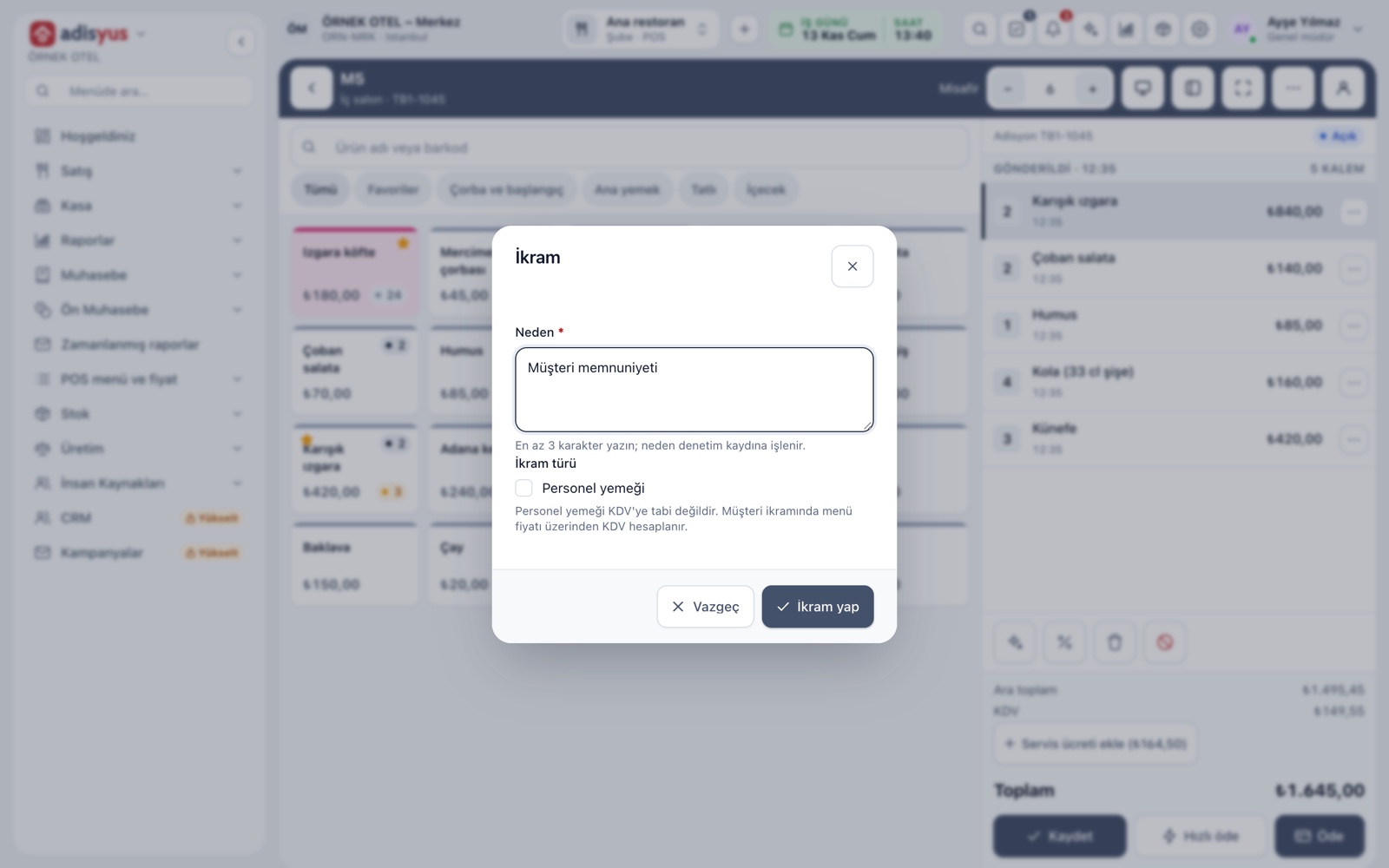
| Unrecorded comps and staff meals | A regular shortage | Process comps on the check |
| Wrong goods receipt | Recurring variance with one supplier | Weigh and count on delivery |
| Wrong recipe or unit | Same item, same direction every time | Correct the recipe and unit |
| Unrecorded issues | Irregular and large | Restrict store access and tie every issue to a record |
| Counting error | Seen once, disappears on recount | Recount |
Defining a tolerance on each card, an acceptable surplus and shortage limit, cleans up the report: only variances beyond the limit stand out and small drifts do not create noise. In adisyus, variances beyond that limit are gathered in the efficiency report, and all count variances appear in a separate report.
Turn the variance into money
A quantity variance alone does not trigger action; its value sets the priority. The variance value is the variance multiplied by unit cost, and the count summary shows the value of the surplus and of the shortage separately. Small quantities of costly items (nuts, alcohol, quality meat) often create the biggest monetary variance, while for bulky cheap items (onions, potatoes) the variance is large in units but small in value. Sort the variance list by value and start with the top five items; if the same items appear in every count, the problem is not the count but the process.
Seven ways to reduce waste
- Order against consumption. Orders placed without seeing real consumption in the period create either surplus or shortage.
- First in, first out. Bring expiry dates to the front of the shelf so older goods are used first.
- Do not hesitate to reject at receiving. Goods accepted without a temperature, appearance and quantity check carry the problem inside.
- Standardise portions. Write the weight into the recipe and put measuring cups in the kitchen.
- Plan prep against expected sales. Do not prep the same quantity for Monday and Saturday.
- Look after storage. Temperature, closed containers and date labels prevent most spoilage. Defining a critical stock level also reminds you when to order.
- Simplify the menu. Slow sellers that need special ingredients are among the biggest sources of waste.
Record waste and classify it by reason
Waste that is not recorded comes back at the count as an "unexplained variance". Define reasons in advance, such as spoilage, preparation error, guest return, breakage and expiry, and make staff choose one on every entry. Waste can also be posted from the check: an item that was sent and prepared counts as waste and its amount comes off the total. Reviewing waste reasons monthly in a management report tells you which measure is needed. The difference between normal loss and waste may have an accounting consequence; settle how to classify it with your accountant.
A weekly routine
- Monday: Cycle count of costly and perishable items.
- Wednesday: Look at the efficiency report and variances beyond tolerance.
- Friday: Summary of waste records by reason; set weekend order quantities.
- Month end: Full count, review of variance value, action list.
Checklist: Are all inputs in? Is the count done by two people? Are tolerances defined? Are waste reasons being selected? Were the recipes of cards with variances checked?
Conclusion
Zero waste is not possible, but making it visible and manageable is. A regular count, a team that can read variances and discipline in recording waste are the three legs of cost control. For waste reasons, counts and stock operations in detail, see Waste and Spoilage.